For the centenary of Maria Callas, Tom Volf directs his first opera. The choice falls on Norma by Vincenzo Bellini – the opera most closely associated with Callas – and on one of the places that mattered to her: the Théât…

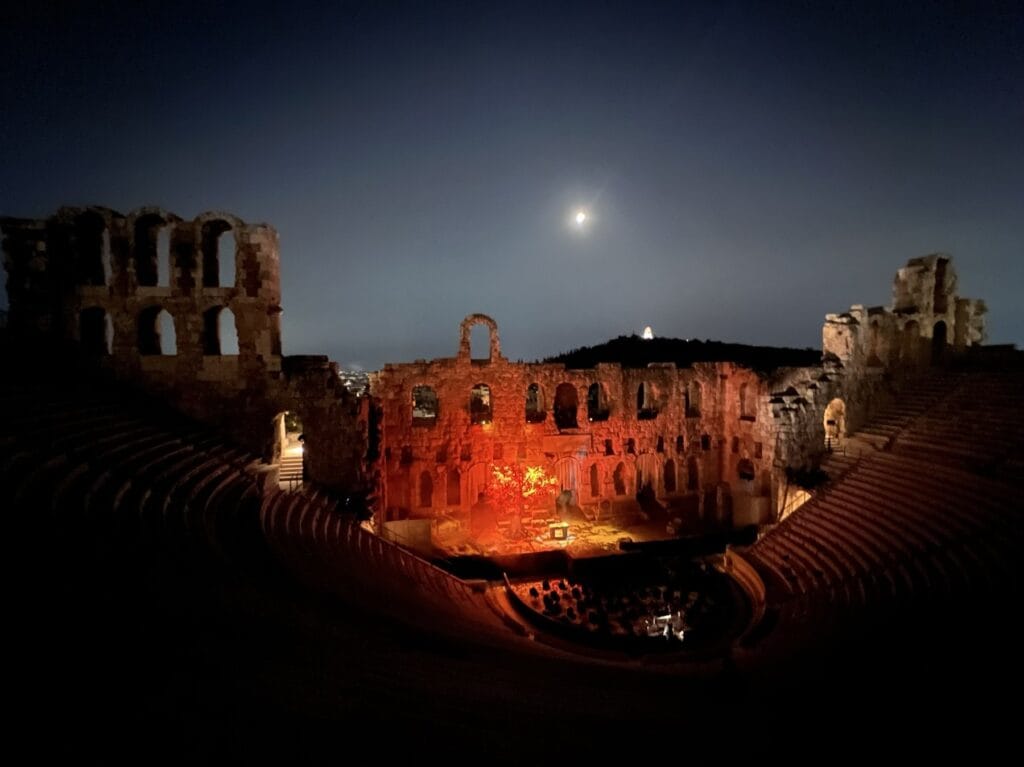
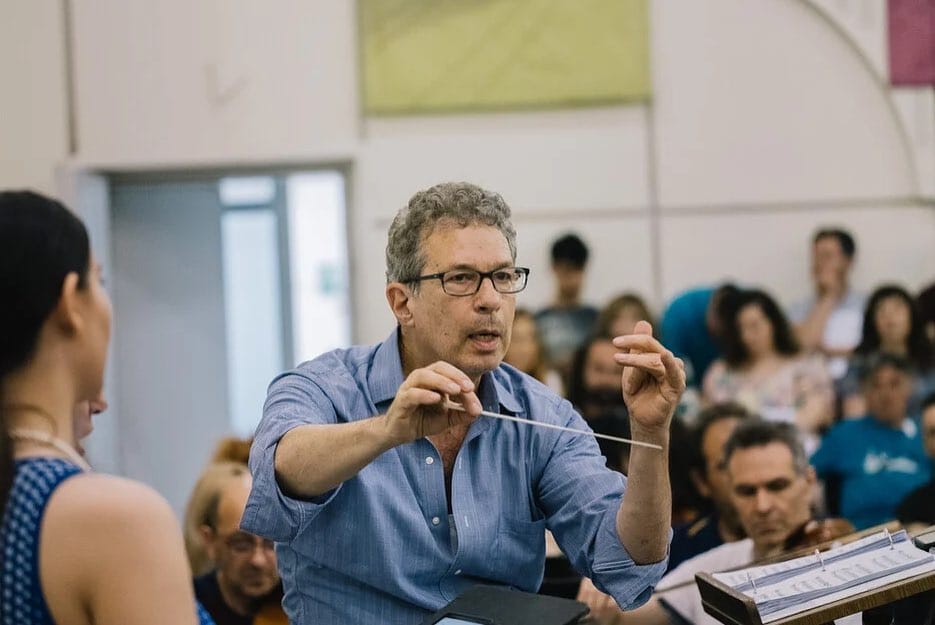
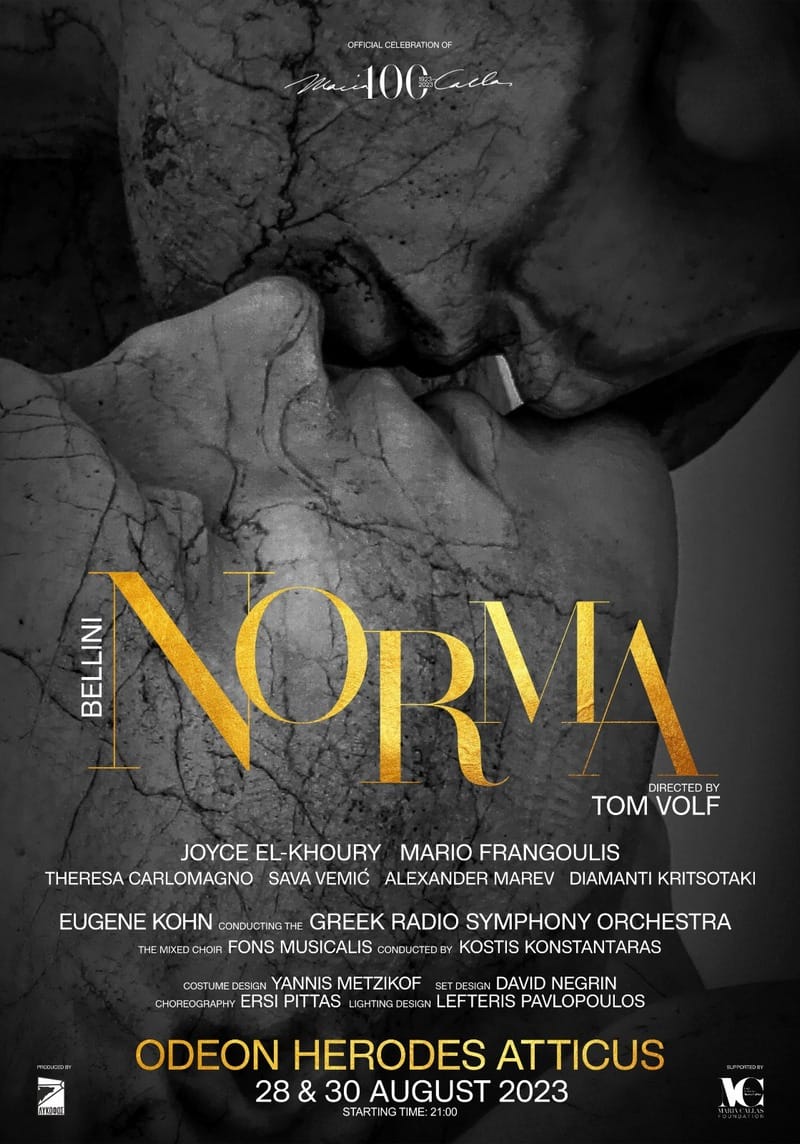
For the centenary of Maria Callas, Tom Volf directs his first opera. The choice is Norma by Vincenzo Bellini — the opera most closely associated with Callas — and in one of the places that mattered to her: the Ancient Odeon of Herodes Atticus, in Athens, where she performed in 1944 and 1957. The two sold-out performances, given on August 28 and 30, 2023 before more than 9,000 spectators, are produced by the Lykofos cultural organisation in collaboration with the Greek television ERT. The musical direction is entrusted to Eugene Kohn — pianist at Callas’ master classes at the Juilliard School (1971-1972).
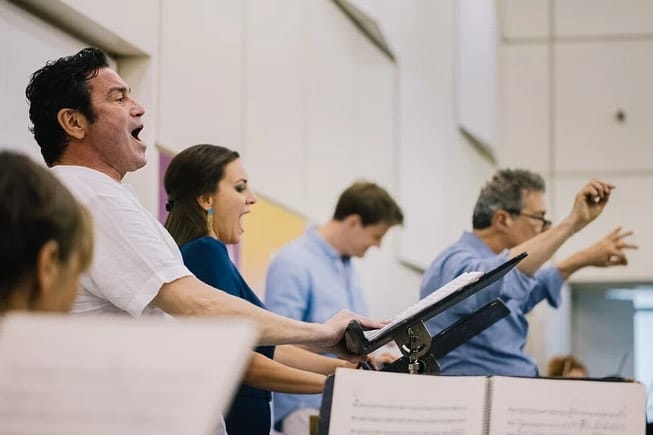
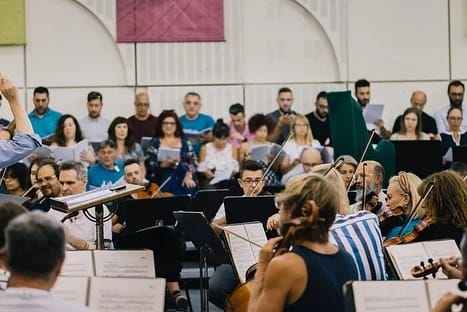
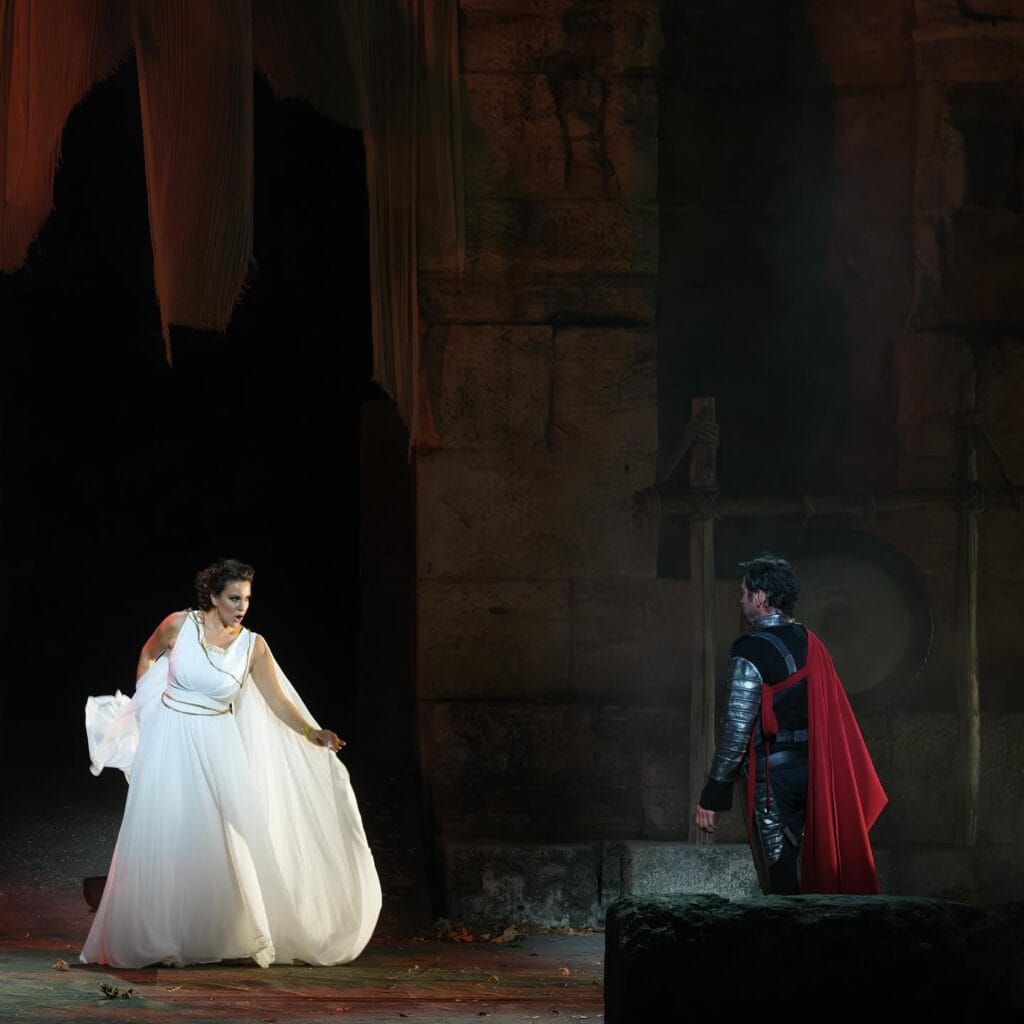
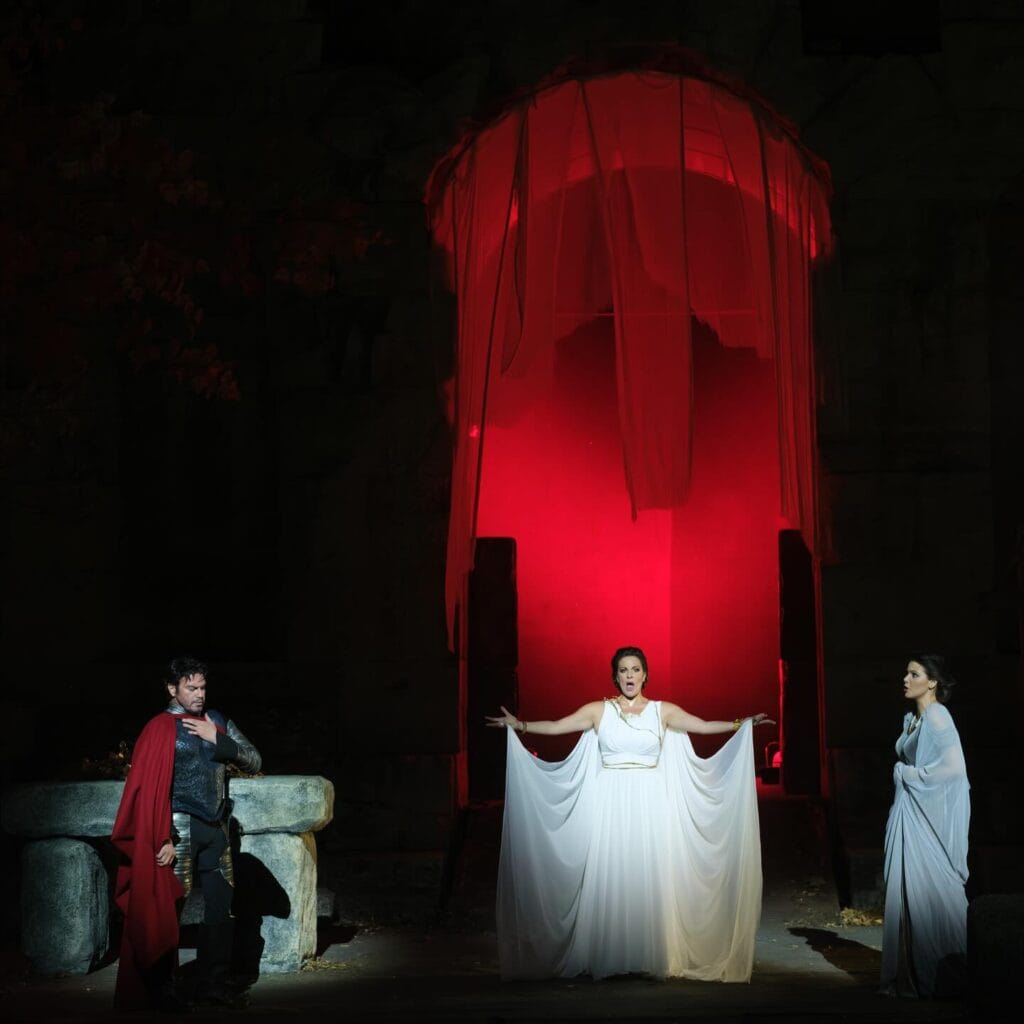
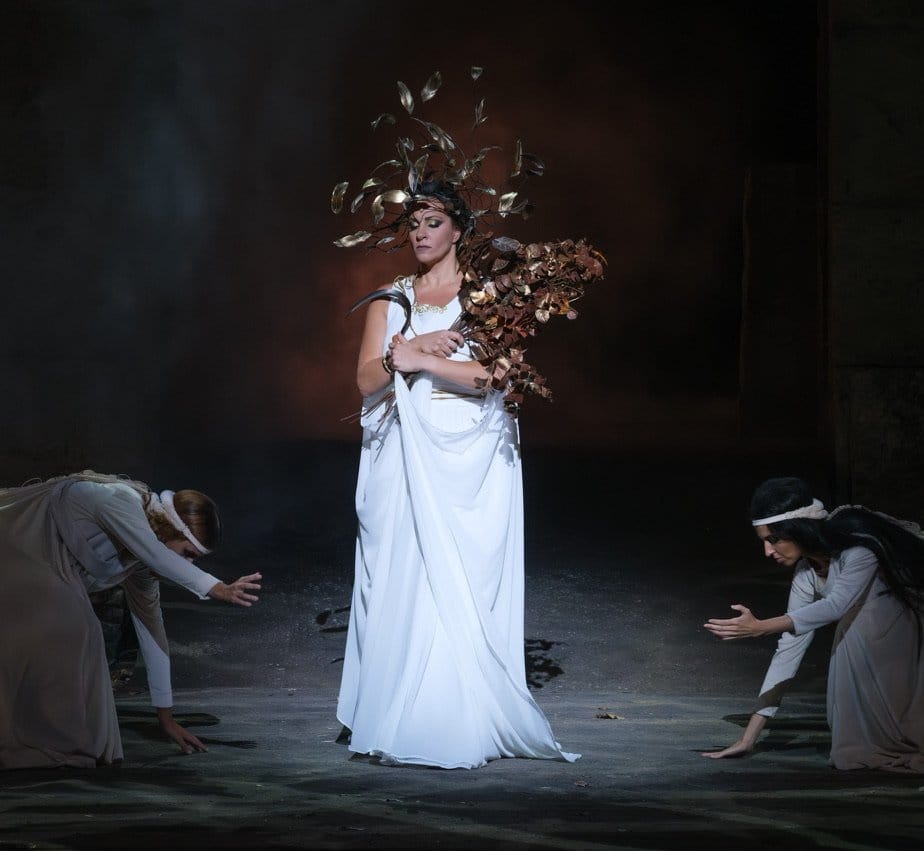
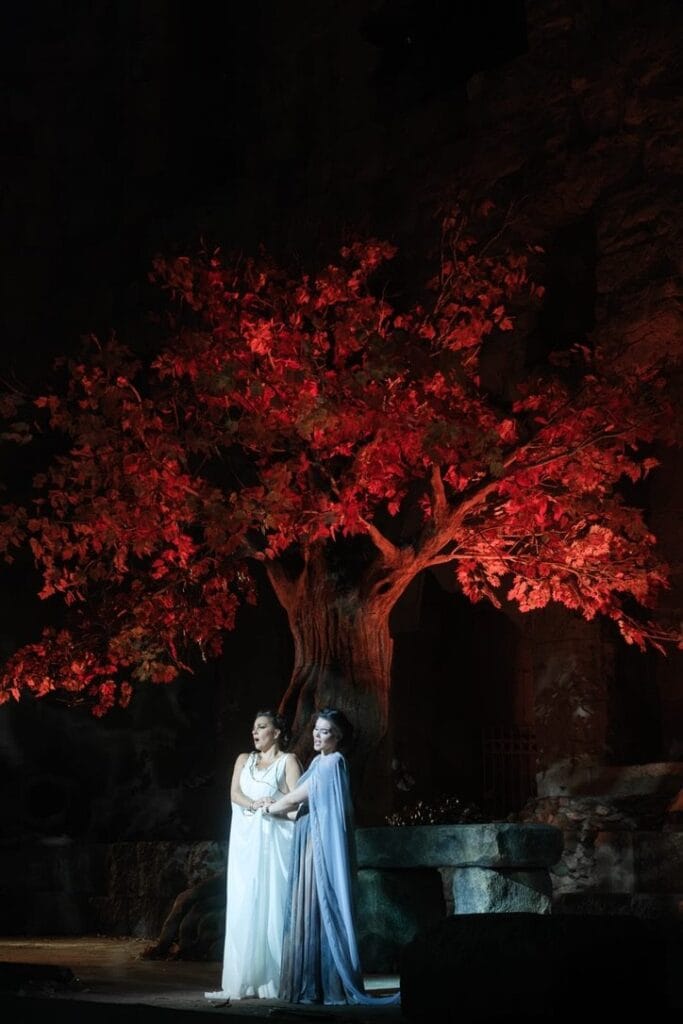
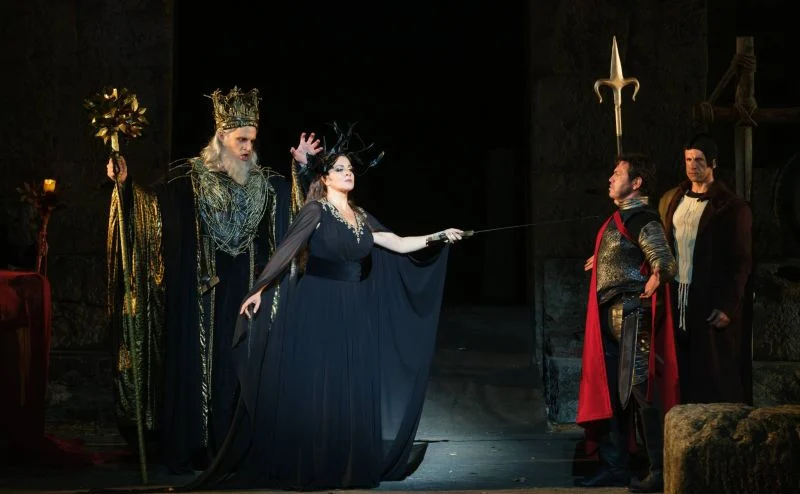
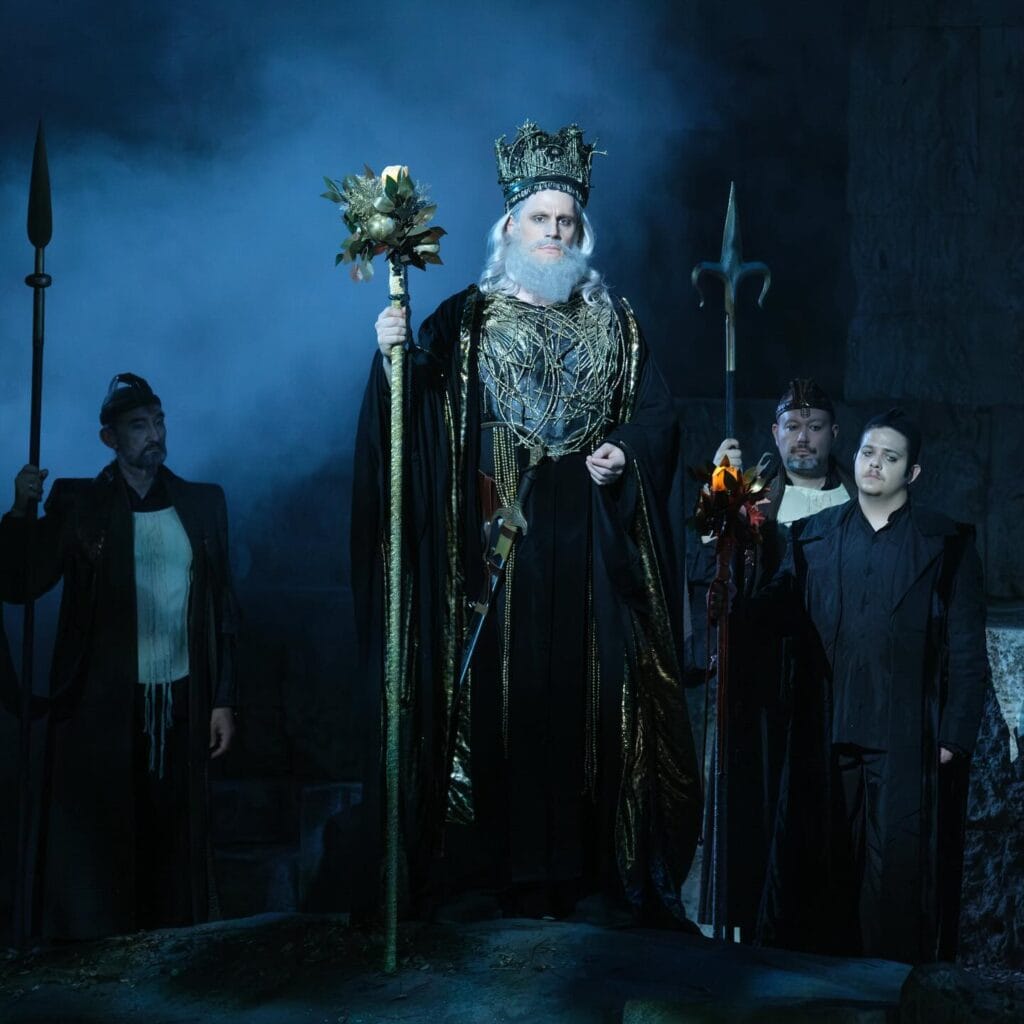
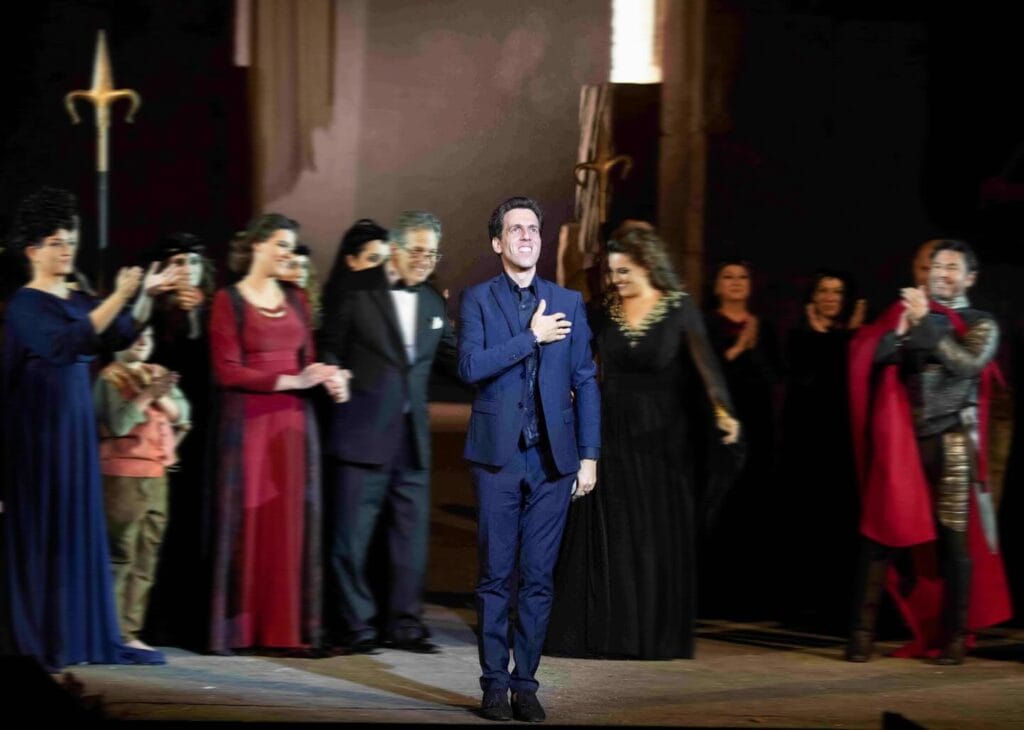
On stage, Joyce El-Khoury makes a triumphant role debut as Norma; alongside her, Theresa Carlomagno (Adalgisa), Mario Frangoulis (Pollione), Sava Vemić (Oroveso), Diamanti Kritsotaki (Clotilde), Alexander Marev (Flavio). The Fons Musicalis Mixed Choir (dir. Kostis Konstantaras) and the Greek Radio Symphony Orchestra accompany the production. Decor: David Negrin. Costumes: Yannis Metzikof. Lights: Lefteris Pavlopoulos. Choreography: Ersie Pittas. In total, more than 110 artists on stage.
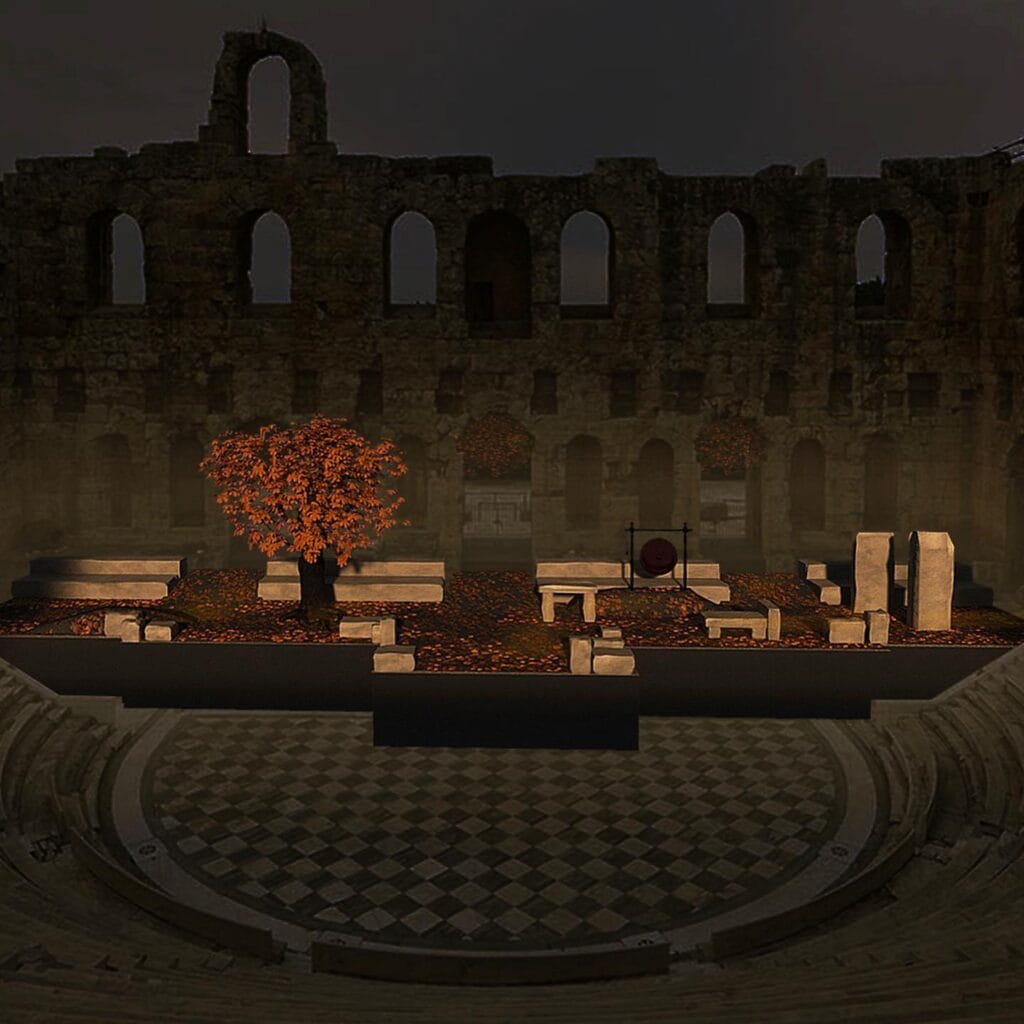
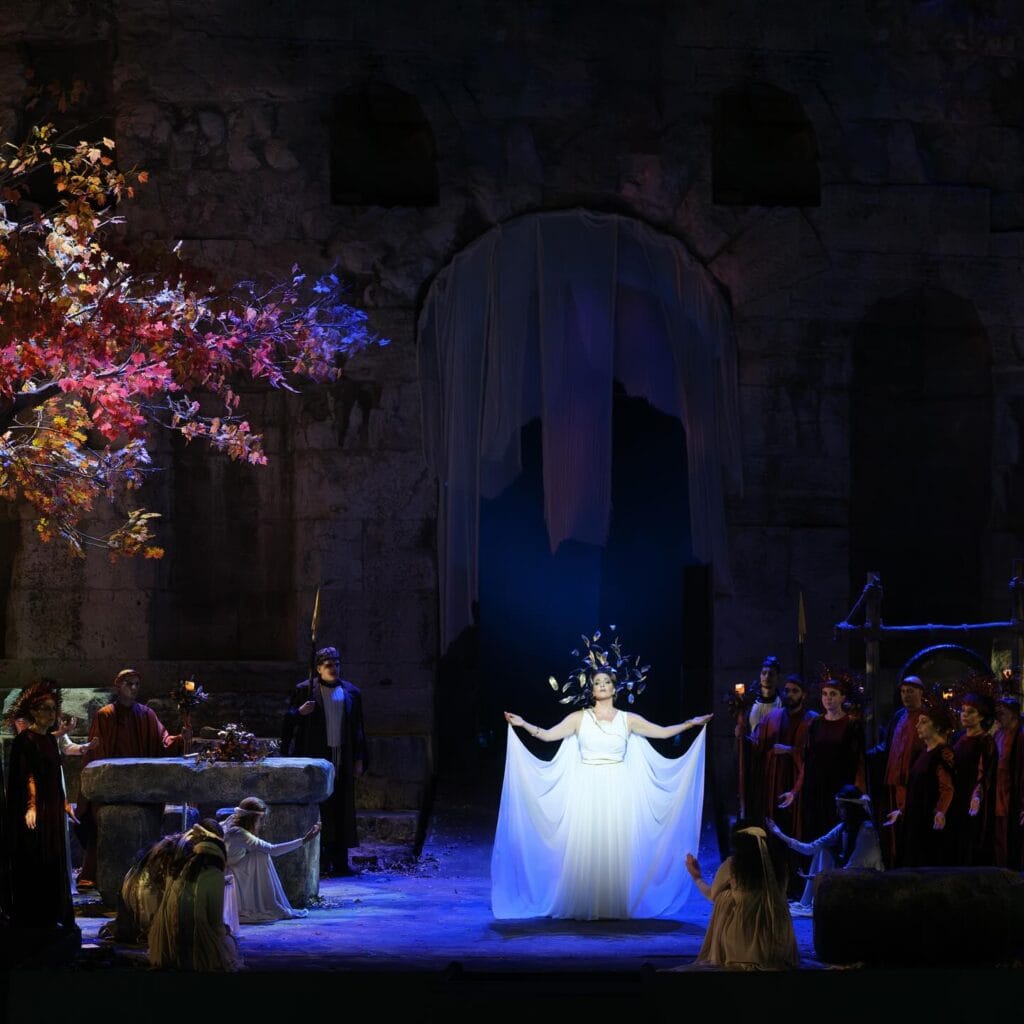
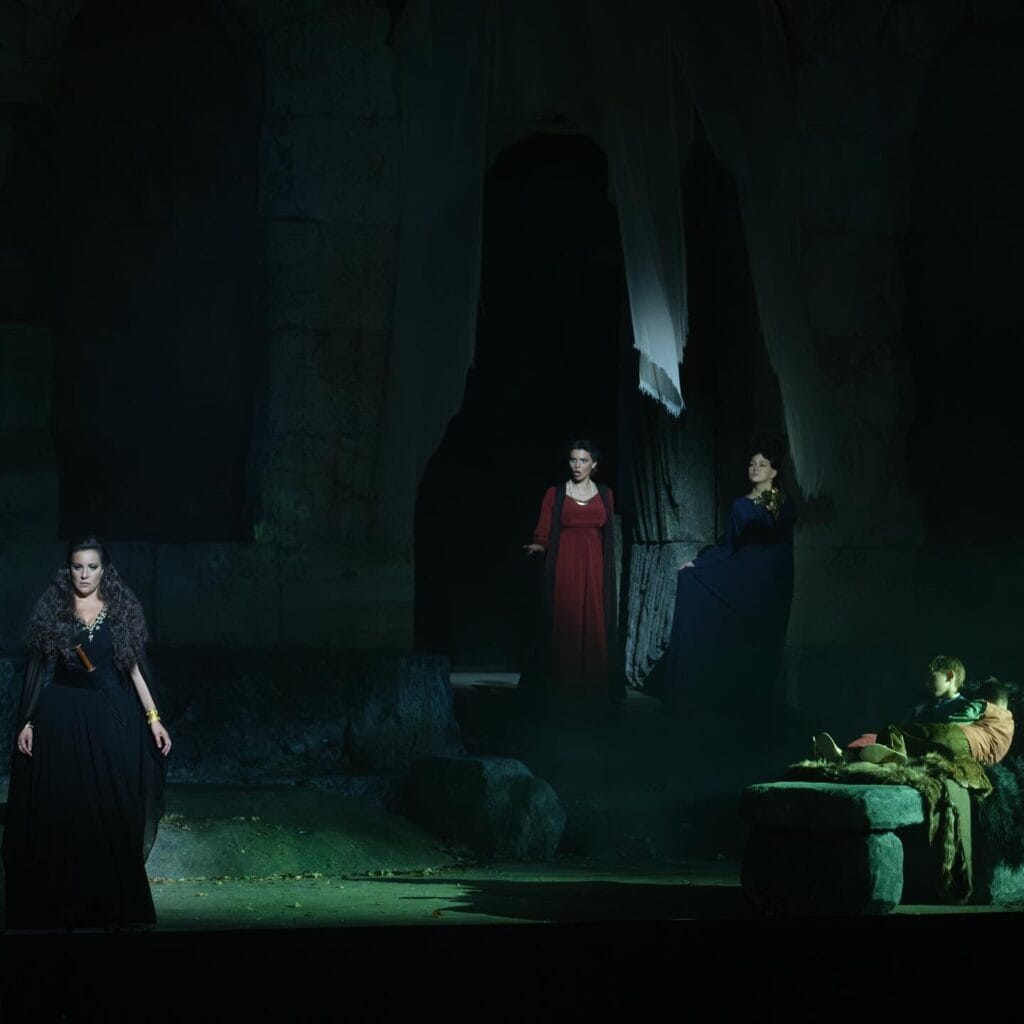
Volf manages to occupy the amphitheatre’s immense stage without filling it.


For Tom Volf, Norma is not a character from the past: a high priestess, an omnipotent tribal leader, the only one who can declare war or peace – and Bellini, two centuries earlier, wrote her as such. The opera unfolds around a chain of betrayals (Norma towards her vows and her people, Adalgisa towards hers and towards Pollione, Pollione towards the two women), but the real subject, according to the director, is redemption. It is she who crosses all the characters and who brings catharsis to the viewer.
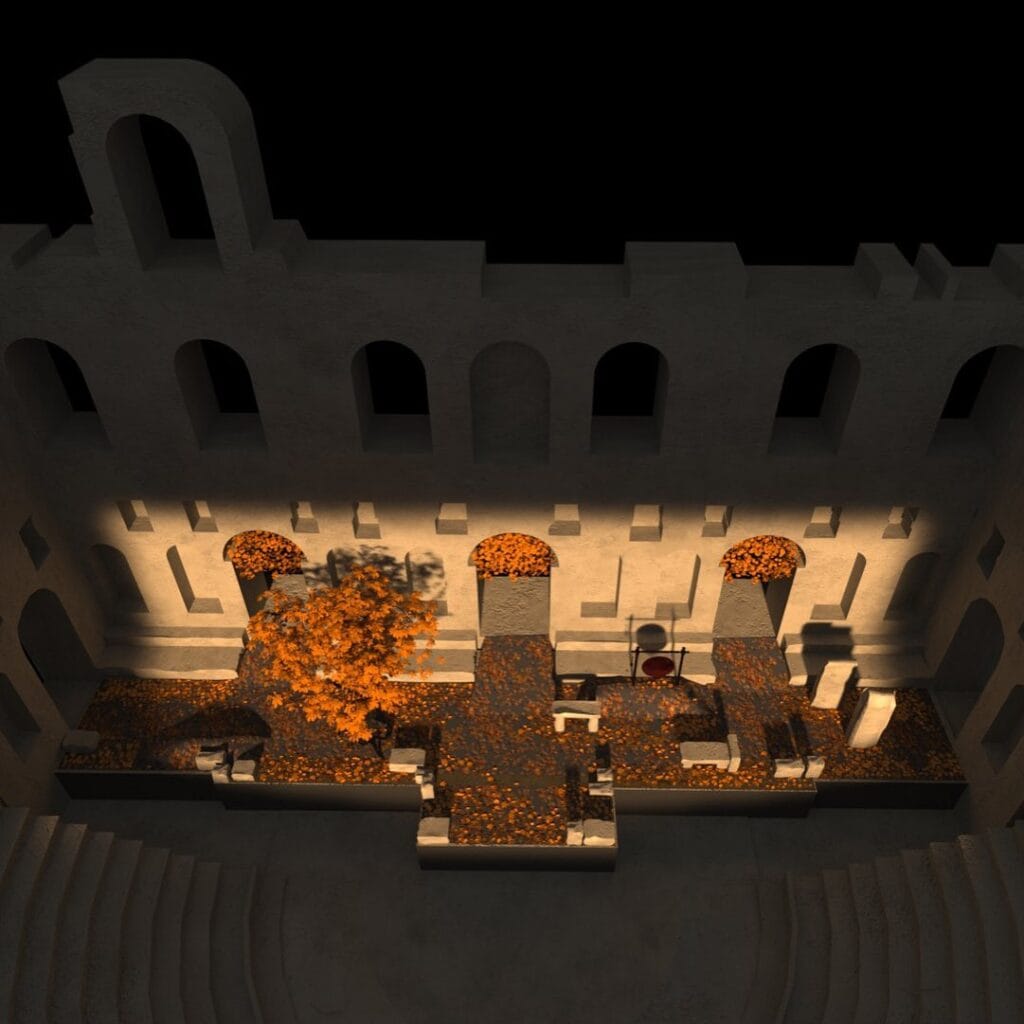
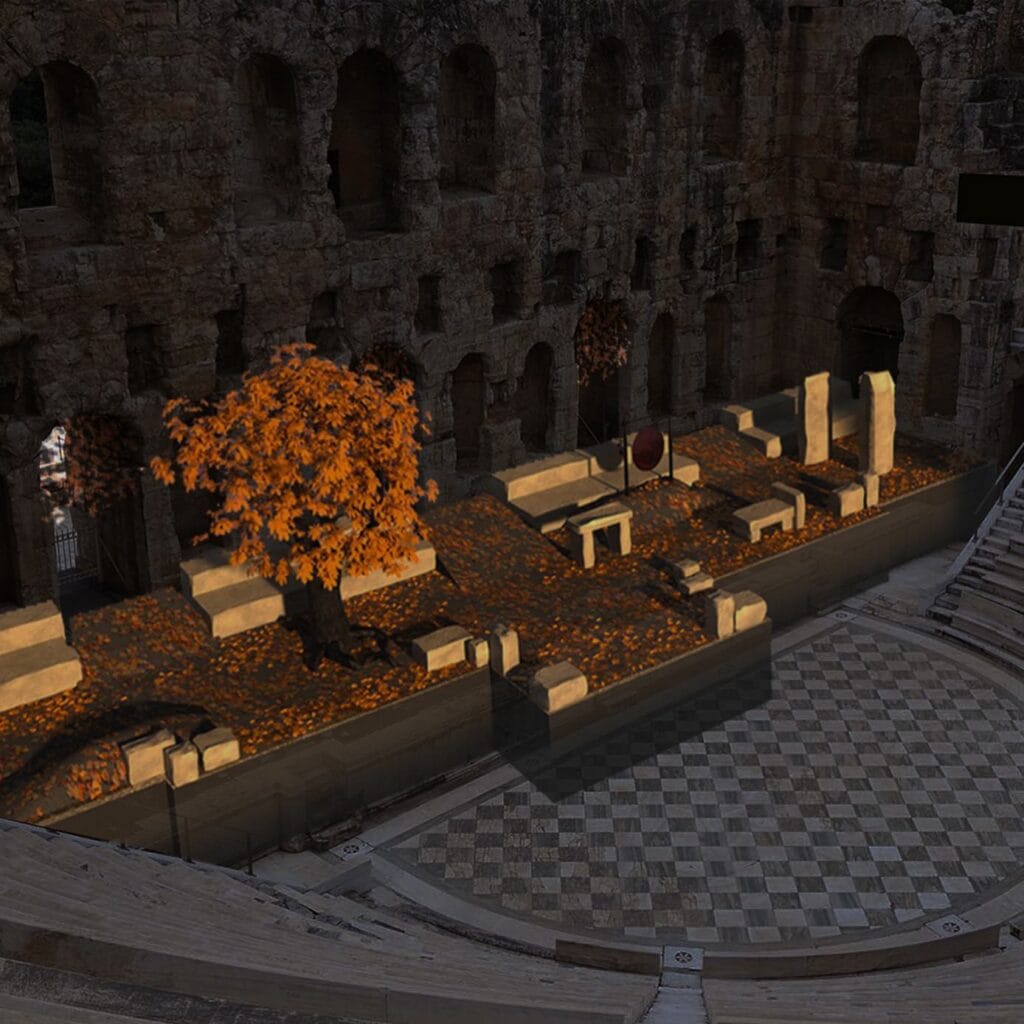
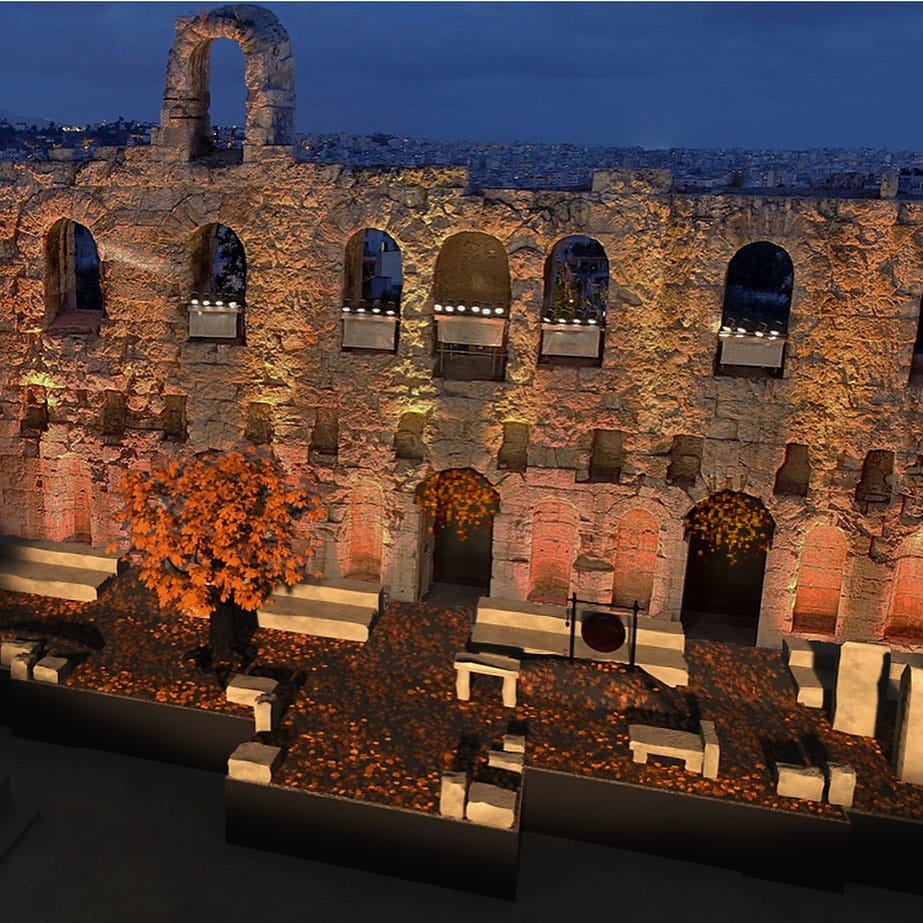
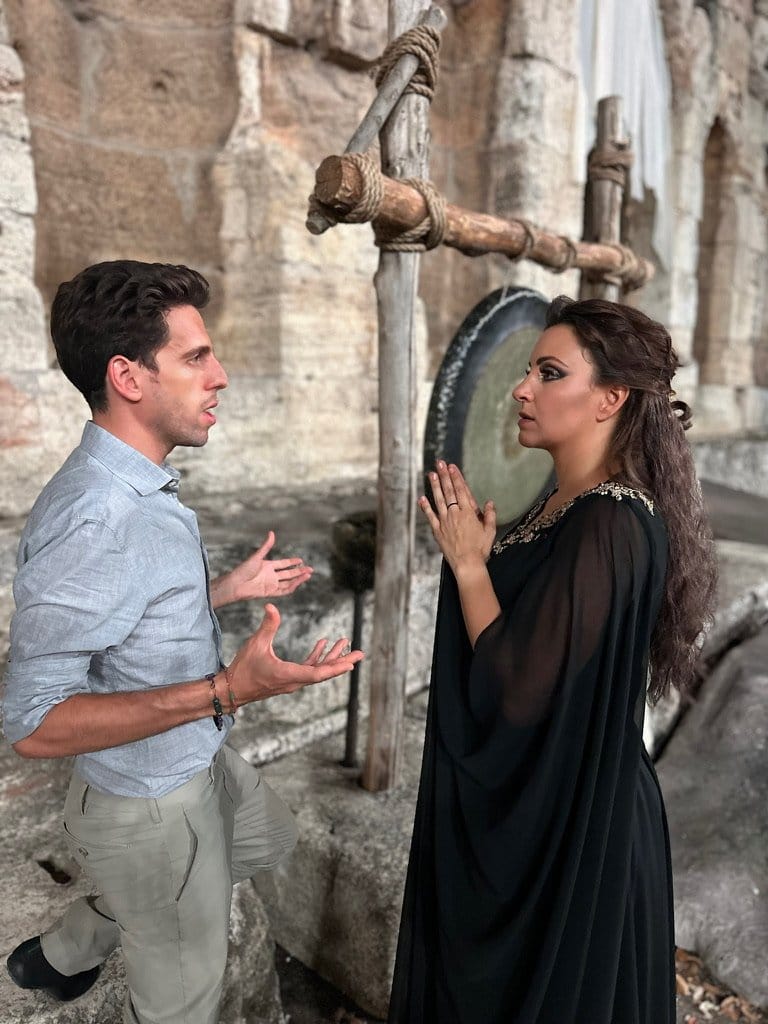
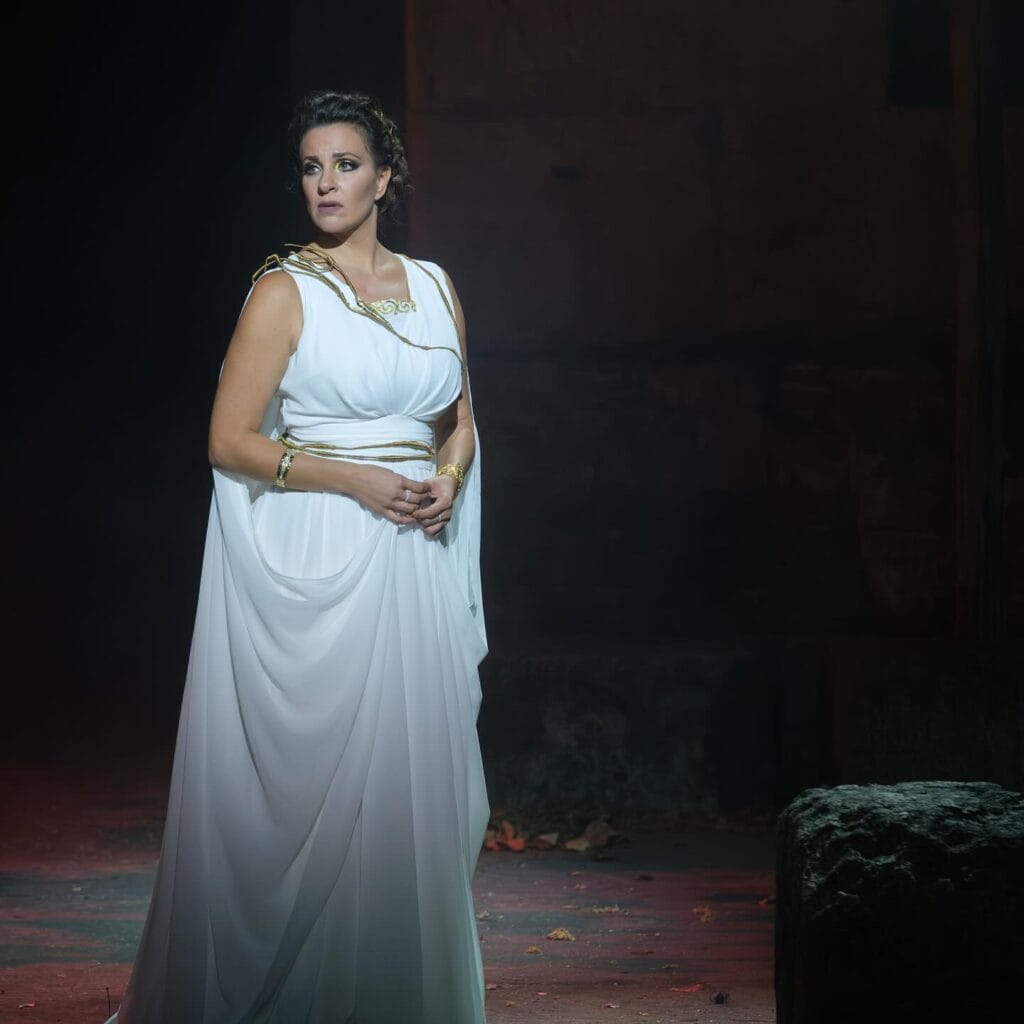
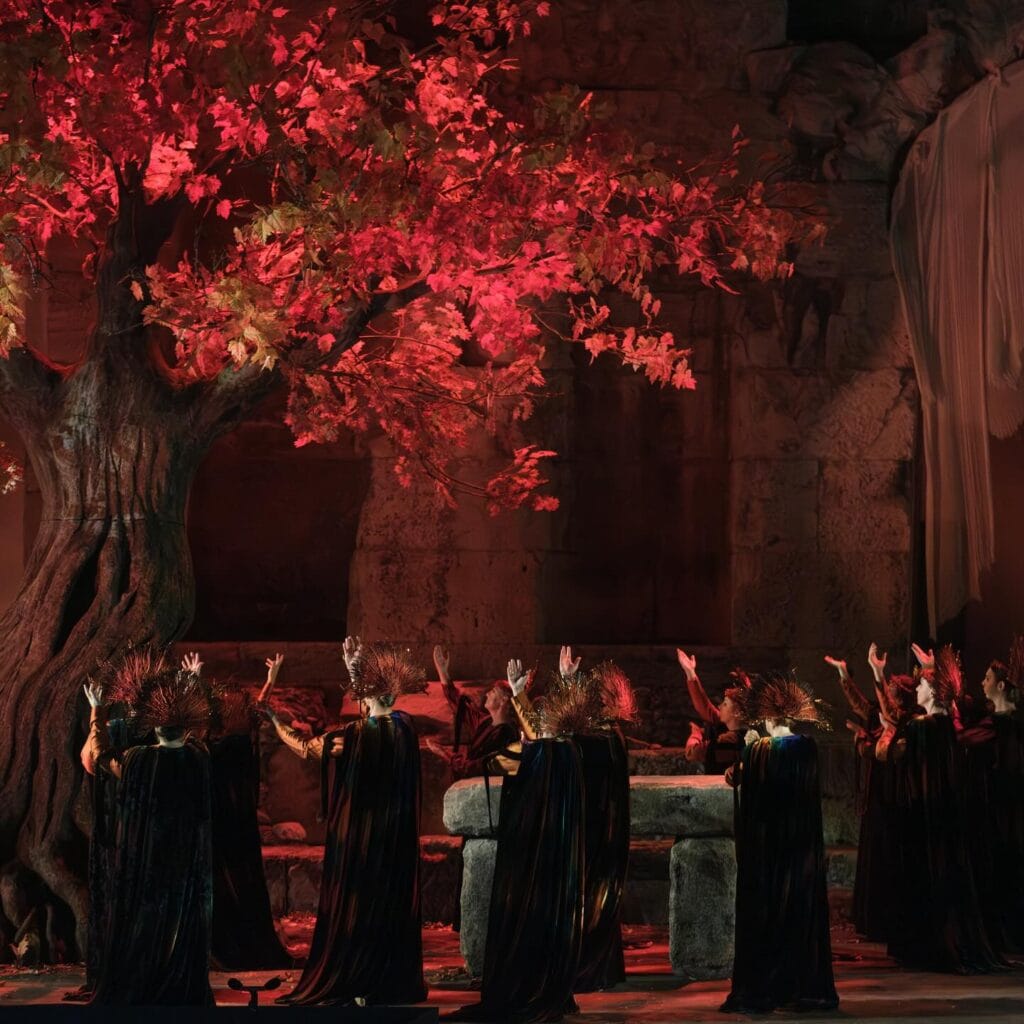
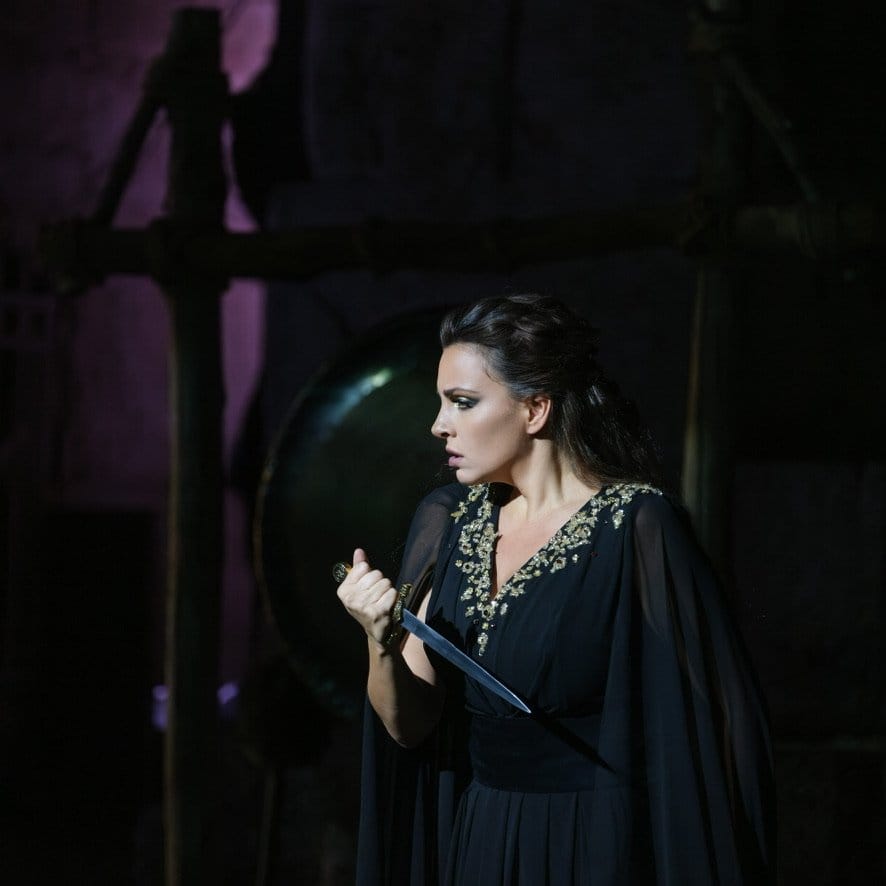
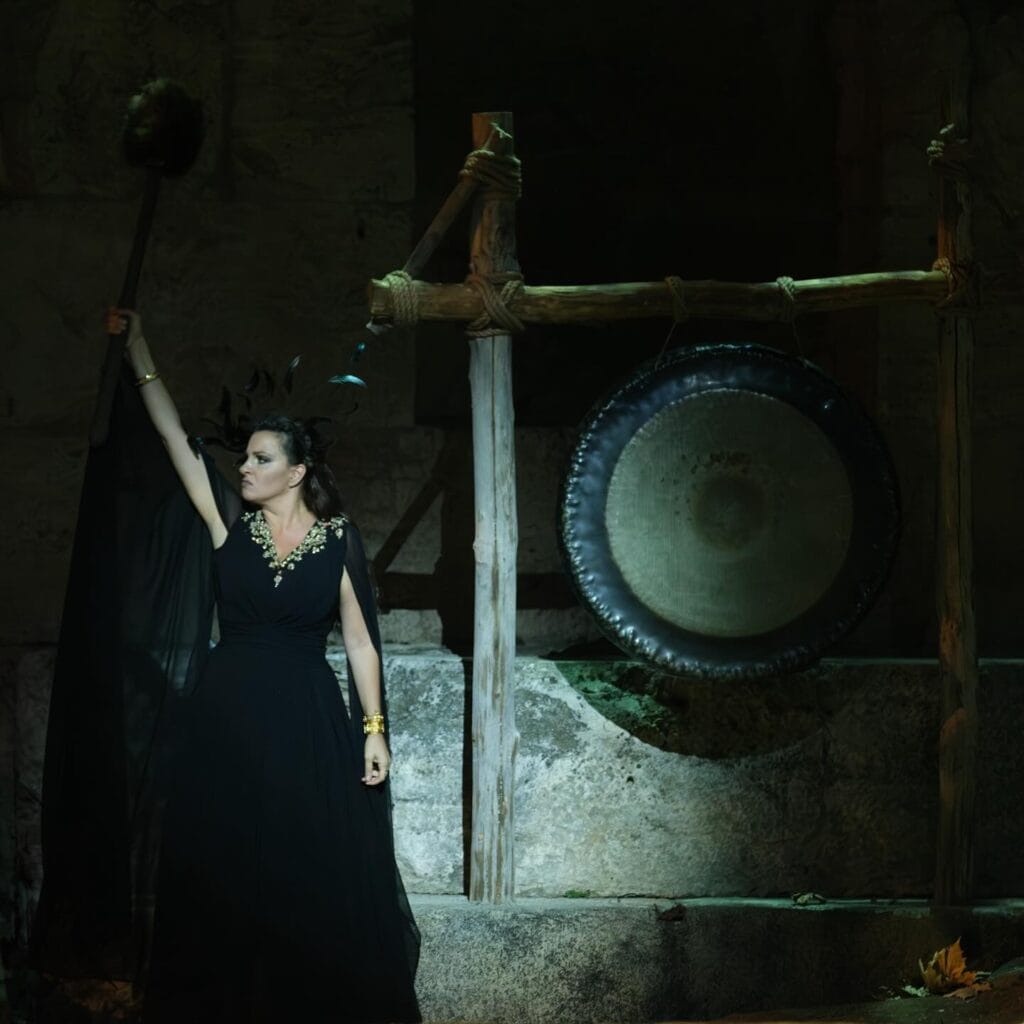
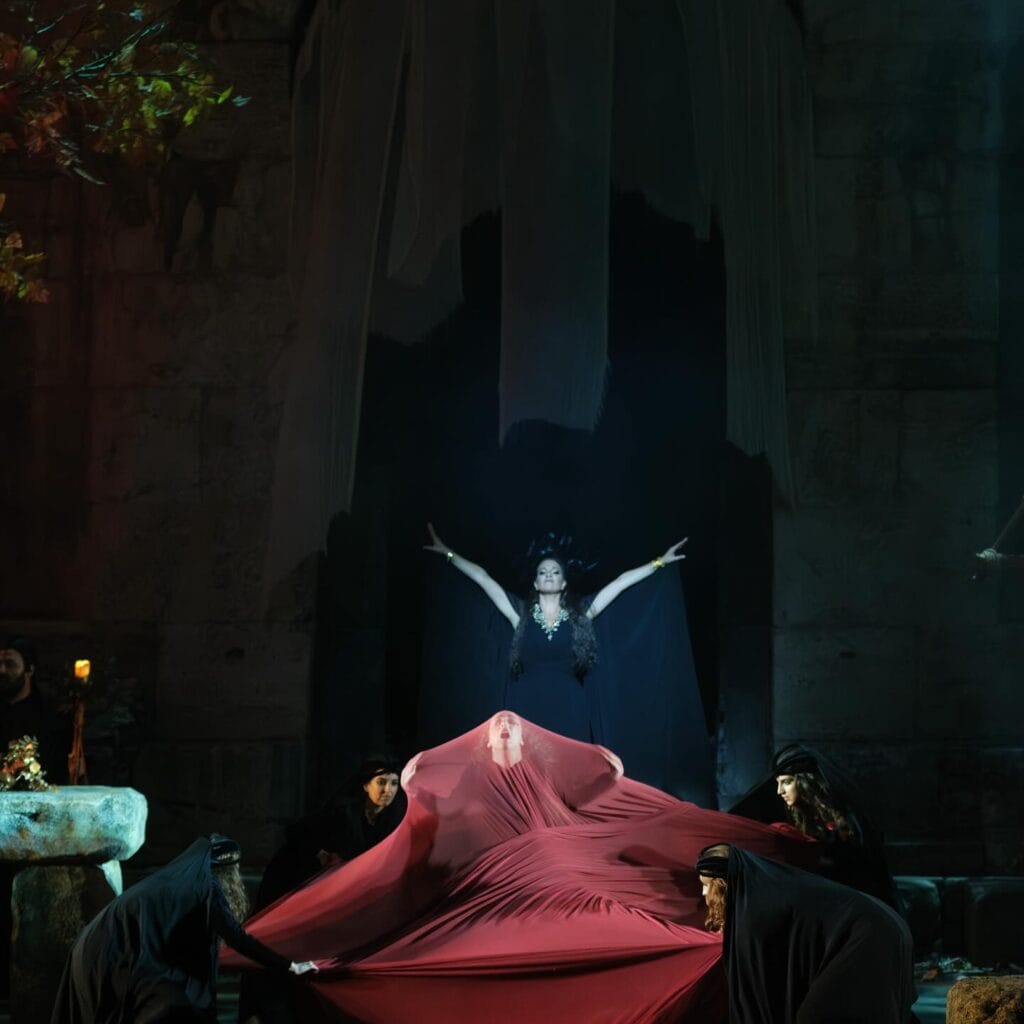
The scenic approach is radical in its sobriety, in an era where contemporary transpositions dominate. Tom Volf leaves the action in the first century BC as the libretto requires, and takes advantage of the ancient amphitheatre: druidic sanctuary marked by a large tree on the left, blocks of stone on the right, central space advanced towards the orchestra pit. The choir, placed statically, takes on the function of an ancient Greek choir. At the interlude of Act II, a threatening figure of death, accompanied by five dancers, crosses the stage; the same red fabric will be used for the call to war and then, at the end, to represent the pyre where Norma immolates herself – a way of avoiding a real fire on stage. Tom Volf's direction of Joyce El-Khoury recalls Visconti's direction of Callas in his Alceste at La Scala: no parasitic movement, a noble posture, the gesture alone, amplified by a dress whose fabric extends the arms.
The choice of El-Khoury is not a coincidence. Tom Volf had heard her in the French version of Poliuto by Donizetti, recorded for Opera Rara, a few months before the project Norma was officially approved. The coherence of the lyrical timbre with what Bellini had written - originally, the role was created by Giuditta Pasta, then sung by Giulia Grisi, two sopranos, at a time when the soprano/mezzo border was not drawn as today - naturally pointed to this voice. Norma is the role Callas sang most often on stage. The production thus pays homage to the singer in the very place which had welcomed her nearly eighty years earlier - to which is added, in Greek memory, the legendary Norma sung by Callas at Epidaurus in 1960.
For Tom Volf, staging at the Herodes Atticus is as much a privilege as a personal commitment: “There is a special energy in this place that goes back a long way, to so many artists, so many performances given here — all of it inspires me deeply.”
Author, photographer and director Tom Volf was an auspicious choice as the stage director of this production.
Soprano Joyce El-Khoury is the best and most convincing Norma I’ve seen in the last two decades.
The lyricism of the performance, tragedy flirting with opera, voices that send shivers through the soul, a plot that holds you breathless — these are the keys to a performance you will remember for years.